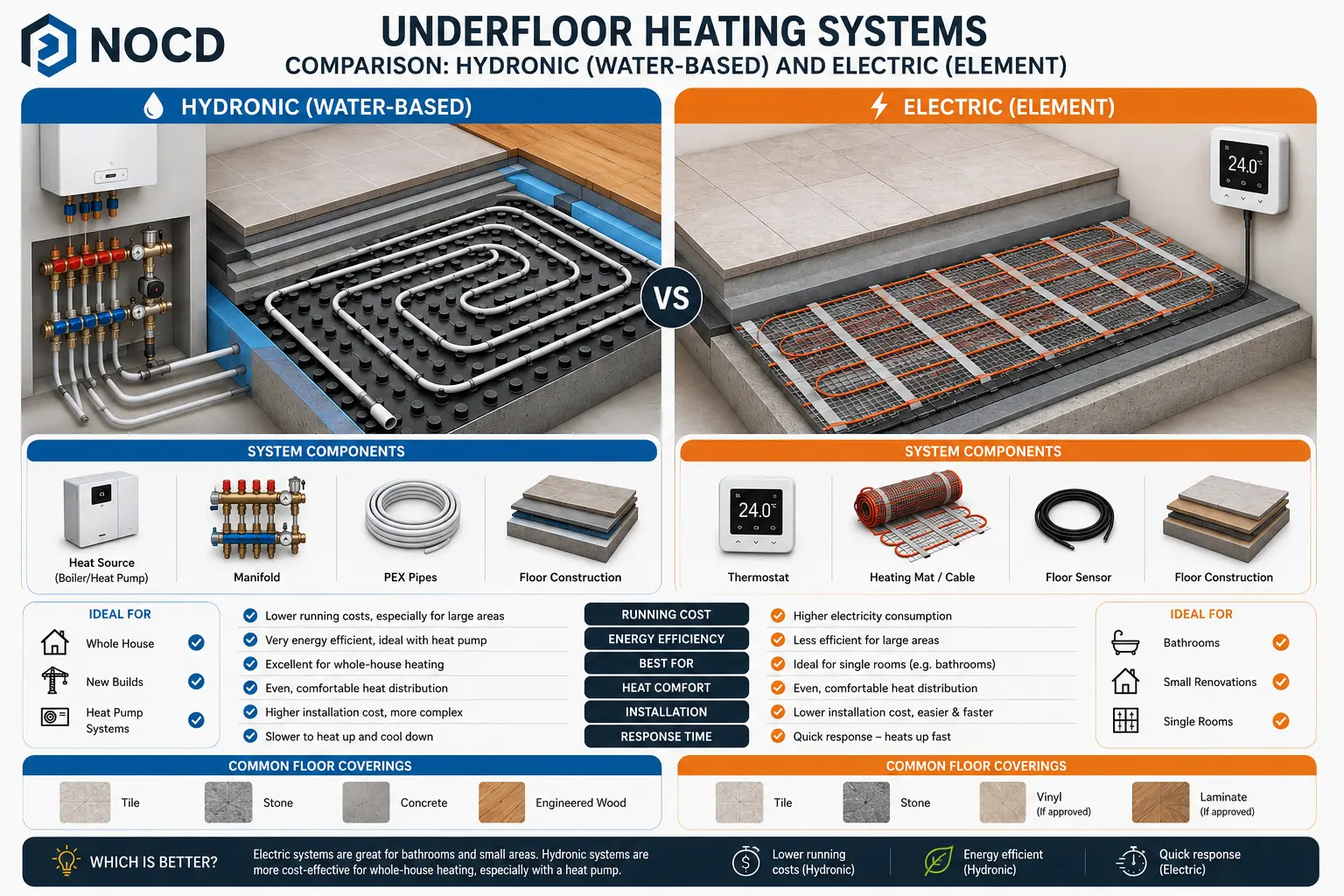
1. Electric Underfloor Heating (The Heating Elements)
Electric underfloor heating elements are permanent, fixed appliances. Under SANS regulations, they cannot just be ignored. The inspector must verify:
-
Isolation: There must be a dedicated means of isolation for the heating system.
-
Insulation Resistance: The heating mats/cables must be tested with an insulation resistance tester (meggered) to ensure the heating element insulation hasn't been nicked or damaged during flooring installation, which would cause a dangerous earth fault.
-
Earth Leakage Protection: Because these elements are embedded in floors (often in wet areas like bathrooms), they must be protected by a 30mA Earth Leakage Protection device.
2. Hydronic Underfloor Heating (Water-Based)
For a hydronic system, the underfloor network consists of water pipes, but it interfaces heavily with the electrical installation:
-
Bonding (SANS 6.13): This is exactly what you pointed out. All exposed conductive parts of the heating system—including the copper manifolds, mixing valves, and metal pump casings—must be bonded to the electrical earth. This ensures that if a control wire chafes against a valve, the entire floor heating manifold doesn't become live.
-
Control Equipment: The circulating pumps, motorized zone valves, and digital thermostats are fixed electrical components. They must be checked for correct polarity, secure wiring connections, and adequate overcurrent/overload protection at the DB board.
Where the Inspector Must Record This
Because these systems draw significant power or interface with the home's earthing network, they cannot be left off the paperwork.
The inspector must account for them in the Mandatory Test Report under:
-
Section 4: Description of Installation (where specialized or fixed appliances are listed).
-
Section 5: Inspection Checklist (specifically verifying earthing, bonding, and the presence of mandatory isolation switches).
-
Section 6: Test Results (recording the circuit's insulation resistance and earth loop impedance values).