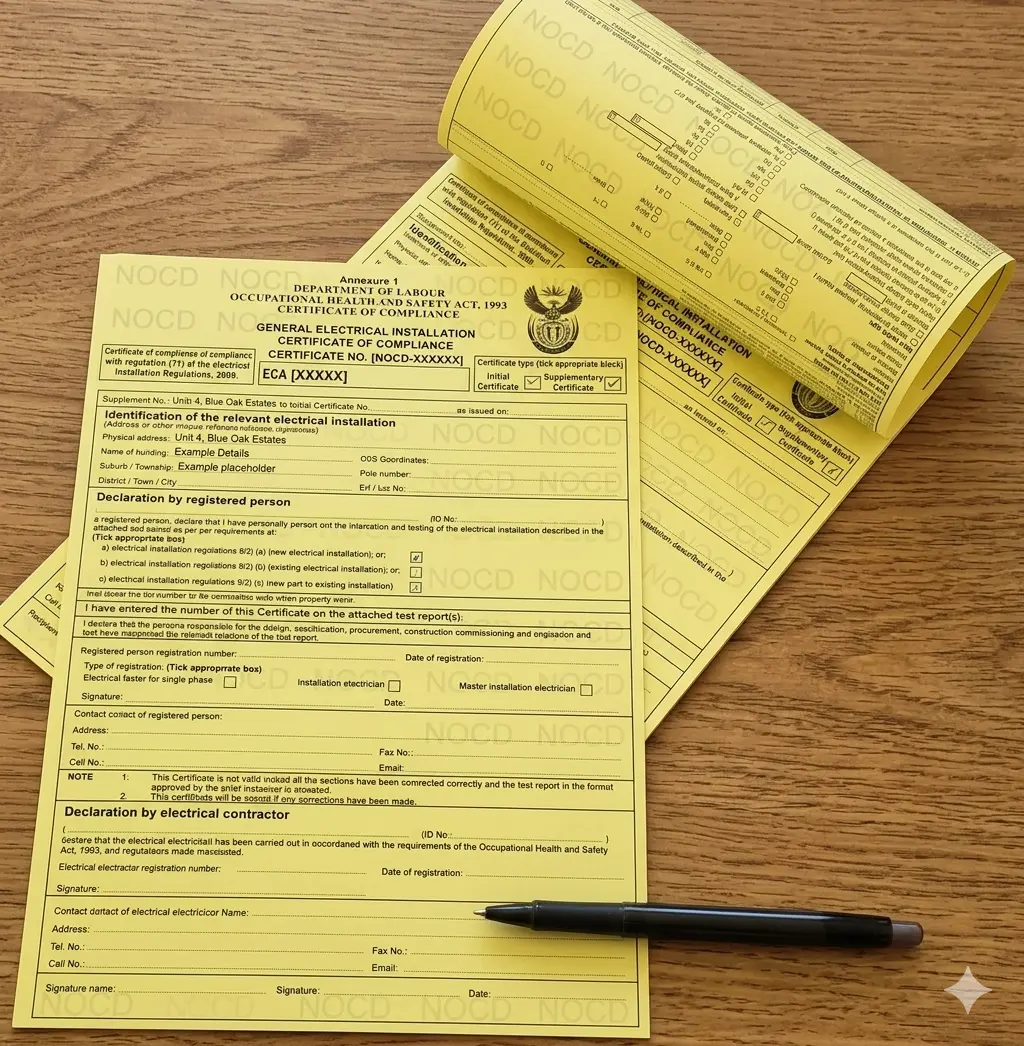
An electrical CoC is a legal document that proves your electrical installation is reasonably safe and complies with the national safety standard—specifically SANS 10142-1 (The Code of Practice for the Wiring of Premises).
Here is exactly what an electrician checks, tests, and documents during a dedicated electrical CoC inspection.
1. The Visual Inspection (The "Eye" Test)
Before the electrician pulls out any testing instruments, they conduct a thorough visual walkthrough of the entire property. They are looking to ensure that all components are correctly installed, undamaged, and rated for their specific use.
-
The Distribution Board (DB Board): They check that the board is constructed of non-flammable material, has a secure door, and that there are no open gaps exposing live copper busbars or wires.
-
Wiring & Conduit: They verify that cables are correctly routed and protected. Wires cannot be exposed or hanging loosely in corridors, garages, or roof spaces.
-
Switches, Plugs, and Light Fittings: Every socket and light switch is checked for physical damage (cracks, burns, or loose mounting). They ensure that outdoor fittings or bathroom lights are properly weatherproofed (IP-rated).
-
Isolation Switches: Fixed appliances—such as your geyser, stove, oven, and garage door motor—must have a dedicated, clearly visible, and accessible isolation switch within a certain distance of the appliance.
2. Physical & Instrumental Testing (The "Live" Test)
Once the visual check is complete, the electrician will isolate parts of your system and use specialized meters (like an insulation resistance tester and loop impedance tester) to run live safety checks.
The Earth Leakage Test
The Earth Leakage Protection unit is the most critical safety device on your board. It monitors the balance of current and trips the power if it detects electricity leaking (e.g., passing through a human body to the ground).
-
The inspector will plug a digital tester into a wall socket and simulate a fault.
-
The earth leakage must trip within 300 milliseconds at a current leakage of 30mA. If it takes longer, or fails to trip, the property fails instantly.
Insulation Resistance Testing
The electrician will disconnect sensitive electronics and send a high-voltage pulse (usually 500V DC) through the dead wiring. This checks the integrity of the plastic coating around your wires. If the insulation has degraded, rats have chewed it, or water has entered the conduits, the test will reveal a dangerous "short circuit" risk.
Earthing and Bonding (SANS Compliance)
This is where many properties fail. The inspector ensures that the entire system is properly connected to the ground (earthed). Furthermore, they check bonding:
-
Metal water pipes, gas pipes, and the metal casing of your geyser must be physically bonded to the electrical earth using thick copper wire and clamps.
-
This ensures that if a live wire accidentally touches your geyser or water pipes, the power trips immediately instead of turning your hot water tap into a fatal electrical hazard.
3. What the Final CoC Package Must Include
If everything passes, the electrician cannot just hand you a single piece of paper and leave. By law, a complete and valid CoC package consists of three integrated parts:
-
The Certificate of Compliance: A standardized, legally binding document signed by the Registered Person (Installation Electrician or Master Installation Electrician) stating the installation is safe.
-
The Mandatory Test Report: A multi-page document detailing the specific layout of your DB board, the number of circuits, and the exact numerical values achieved during the instrument testing (such as earth loop impedance and insulation resistance values).
-
Specialized Annexures (If Applicable): If your property has sub-boards, a solar PV system, or an inverter, these require their own supplementary test sheets and compliance details integrated into the main report.
Common Misconceptions: What is NOT Covered
It helps to know what the inspector will actively ignore, as these items often cause unnecessary worry for homeowners:
-
Temporary Appliances: Fridges, washing machines, microwaves, televisions, and kettles are not part of the permanent installation. They are not inspected.
-
Light Bulbs: If a light bulb is blown, it is not a CoC failure—provided the light fitting itself is wired safely and the switch works.
-
Underfloor Heating / Intercoms: These are generally considered specialized low-voltage or non-fixed systems and are excluded from the standard electrical wiring certificate.